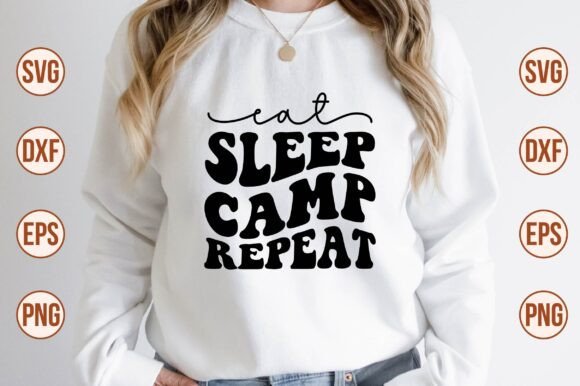
Eat Sleep Camp Repeat Retro SVG Review
As a designer who spends more time than I care to admit staring at stitch density maps and debating thread color palettes, I approach every new digital asset with a healthy dose of skepticism. The market is flooded with "cute" graphics that look charming on a screen but fall apart under the needle. That is exactly why I decided to put Eat Sleep Camp Repeat Retro SVG through its paces before recommending it for any real-world embroidery project.
This isn't just about whether the file opens correctly in your software; it is about whether the design holds up when translated from pixels to thread. I evaluated this vector graphic specifically for its potential in commercial handmade products, focusing on how it performs as a machine embroidery design, an applique design, or a printed graphic on custom apparel. Here is my honest breakdown of what works, what requires caution, and where this design truly shines.
First Impressions: Mood and Visual Personality
The moment you load Eat Sleep Camp Repeat Retro SVG, the vibe is immediate. It taps into that nostalgic, outdoorsy aesthetic that has been dominating craft fairs and boutique shops for years. The retro styling suggests warmth, adventure, and a love for the simple life. For designers looking to create personalized gifts or small shop product lines, this mood is incredibly marketable.
From a layout perspective, the composition feels balanced. It does not scream for attention but rather invites the viewer in. This subtlety is crucial for embroidery because overly complex designs can become muddy stitches if the digitization is not perfect. The visual personality here is friendly and approachable, making it suitable for a wide range of demographics—from hobbyists making baby items to serious Etsy sellers targeting outdoor enthusiasts.
Real-World Application: Where This Design Fits Best
I tested the conceptual application of this design across several common product categories to see where it would generate the most value. The versatility of the underlying vector format means it can be adapted, but some uses are more natural than others.
- Tote Bag Embroidery: This is arguably the strongest use case. A canvas tote bag provides a stable, flat surface that allows the details of the Eat Sleep Camp Repeat Retro SVG to breathe. Whether used as a full chest print or a centered pocket placement, it looks professional and durable. It appeals directly to the target audience of people who love camping and nature.
- Sweatshirt Embroidery: Heavy cotton fleece offers excellent stability for stitching. Placing this design on the front of a crewneck sweatshirt creates a high-value handmade product. The retro theme pairs perfectly with chunky knits and cozy fabrics, resulting in a finished product that feels cohesive and stylish.
- Baby Embroidery Items: While the theme is rugged, the retro style softens it enough for nursery decor or baby blankets. When scaled down appropriately, the design becomes a charming accent on burp cloths or hooded towels. However, care must be taken with stitch density to ensure the fabric remains soft for delicate skin.
- Embroidered Patches: The self-contained nature of the graphic makes it ideal for creating iron-on or sew-on patches. These are popular accessories for denim jackets and backpacks. If you plan to sell these as digital embroidery files or physical patches, the clean lines of the vector source will help maintain clarity even after multiple washes.
Technical Performance and Stitching Considerations
Having access to an EPS file and a DXF file is a significant advantage. These formats allow for precise editing and scaling, which is essential when preparing a digital embroidery file for different hoop sizes. However, having the vector source does not automatically guarantee a good embroidery result. You still need to consider how the design translates to thread.
When converting this graphic into a machine embroidery design, pay close attention to the stitch density. Areas that rely on fill stitch need enough space between threads to show texture without puckering the fabric. If the design includes text or thin lines, ensure they are converted to satin stitch or running stitch appropriately to prevent breakage.
Fabric choice plays a massive role in the final look. On textured fabrics like burlap or heavy linen, fine details may get lost. Similarly, stretchy fabrics like jersey knit require a strong stabilizer to prevent distortion. I recommend using a cut-away stabilizer for garments that will undergo frequent washing, ensuring the Eat Sleep Camp Repeat Retro SVG remains crisp over time.
Where to Use With Caution
Not every surface is created equal. There are specific scenarios where this design might struggle:
- Small Hoop Sizes: If you attempt to fit intricate details into a very small hoop, you risk losing definition. Always check the minimum dimensions required for clear stitching.
- Curved Surfaces: Applying this design to caps or curved hat fronts can distort the symmetry. Unless you have advanced digitizing skills to compensate for curvature, stick to flat surfaces like aprons or pillow covers.
- Dense Stitch Areas: Avoid placing dense fill stitches near delicate edges or on thin fabrics, as the tension can cause tearing or visible backing material.
- Dark Fabrics Without Underlay: If embroidering on dark fabric, ensure proper underlay stitches are used to prevent the base fabric from showing through the thread colors.
Impact on Brand and Customer Perception
In the world of craft business and Etsy selling, presentation is everything. A well-executed embroidery project signals quality and attention to detail. Using Eat Sleep Camp Repeat Retro SVG allows you to create a consistent brand identity that resonates with customers who value authenticity and nostalgia.
When customers see a finished product—whether it is a custom apparel item or a holiday gift—they are judging the craftsmanship. Clean lines, accurate registration, and appropriate thread choices build trust. Conversely, sloppy stitching or poor color contrast can undermine even the best design concept. By testing your Eat Sleep Camp Repeat Retro SVG on scrap fabric first and reviewing it in black and white mockups, you can anticipate potential issues before committing to expensive materials.
Practical Designer Notes for Success
To get the most out of this graphic, follow these practical steps:
- Test First: Always run a test stitch on the actual fabric you intend to use. This reveals issues with thread tension, stabilizer adhesion, and color contrast.
- Check Licensing: Before listing any finished items on Etsy or other platforms, confirm the licensing terms. Ensure you have the right to sell commercial embroidery projects derived from this file.
- Optimize Thread Colors: Choose thread colors that complement the retro palette but offer sufficient contrast against your chosen fabric. Neutral tones often work best for versatile designs.
- Use Proper Stabilizer: Match the stabilizer weight to the fabric weight. Light fabrics need light stabilizers; heavy fabrics need robust support.
- Inspect Small Details: Zoom in on the vector file to identify any tiny elements that might not survive the digitization process. Simplify if necessary.
Final Verdict
Eat Sleep Camp Repeat Retro SVG is a solid addition to any designer’s library of design assets. It offers a timeless aesthetic that appeals to a broad audience and lends itself well to various handmade products. From tote bag design ideas to sweatshirt embroidery concepts, the potential applications are extensive. However, success depends on careful execution. By respecting the technical limitations of embroidery and prioritizing quality control, you can transform this vector graphic into a profitable and beautiful finished product.
For crafts enthusiasts, graphics creators, and small business owners alike, this file represents a reliable foundation for creative exploration. Just remember: the file is only half the equation. Your skill in preparation, stitching, and finishing determines the ultimate value of the project.